The Life of Alphonse de Lamartine: Poet, Politician, and Patriot
Early Life and the Romantic Awakening
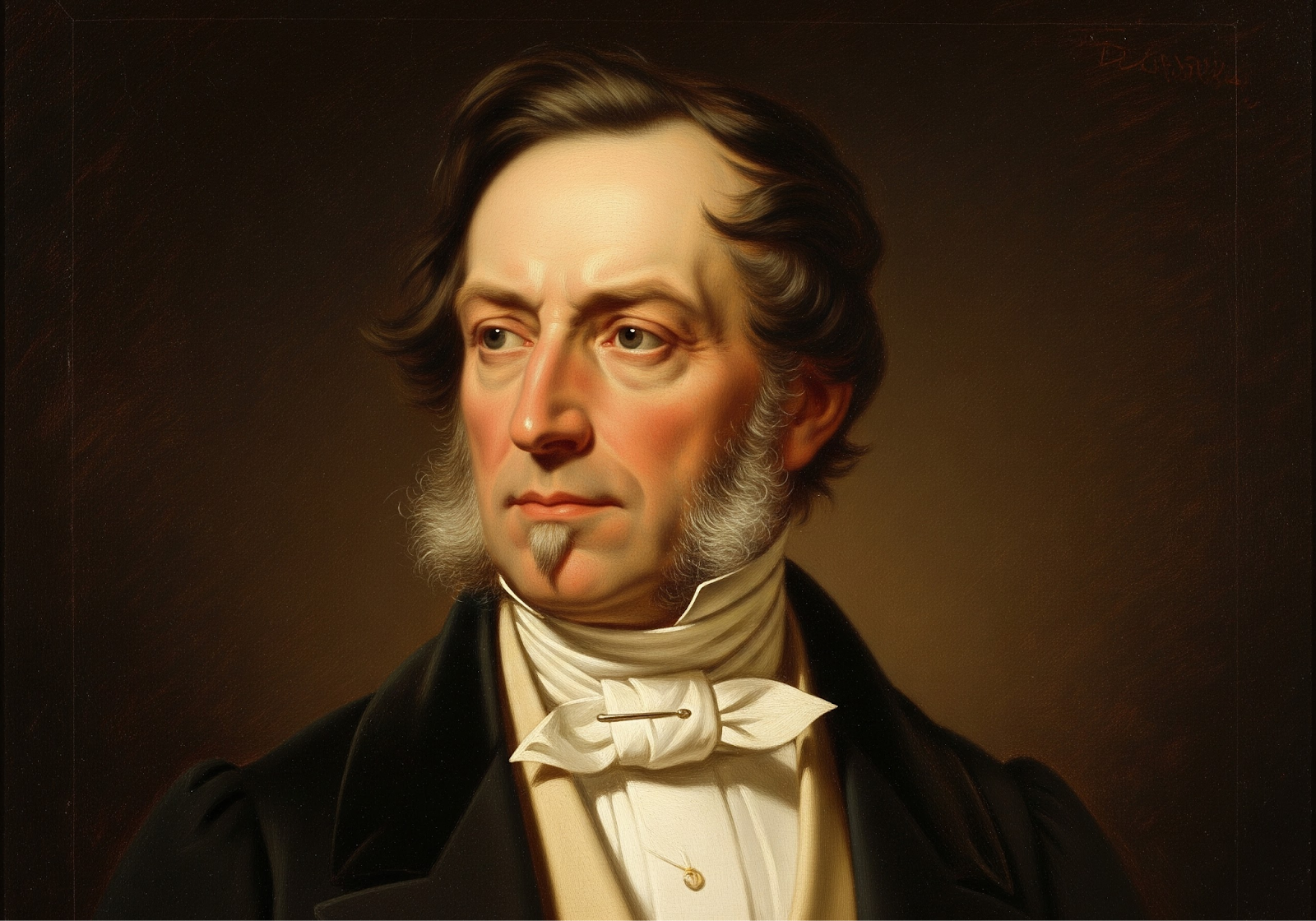
Alphonse de Lamartine was born in 1790 in Mâcon, France, into a family of minor nobility. His upbringing in the rural landscape of Burgundy deeply influenced his poetic sensibilities. In 1820, he published "Méditations poétiques," a collection that became a cornerstone of the French Romantic movement. His verse, characterized by emotional depth and musicality, resonated with a generation seeking solace in the beauty of nature and the complexities of the human soul.
The Influence of Travel and Love
Lamartine's travels, particularly his journey to the Orient, expanded his worldview and enriched his literary output. His experiences in the Middle East resulted in "Voyage en Orient," a work that combined travelogue with philosophical reflection. Throughout his life, his relationships, most notably with Julie Charles, served as a profound source of inspiration for his most famous poems, such as "Le Lac."
Political Ascendance and the 1848 Revolution
As his literary fame grew, Lamartine increasingly turned his attention to the political sphere. He believed that the poet had a duty to serve society. By the 1830s, he was elected to the Chamber of Deputies, where his oratory skills became legendary. He advocated for social reform, the abolition of slavery, and the death penalty, positioning himself as a leader of the liberal opposition.
Leadership of the Provisional Government
The pinnacle of his political career came during the Revolution of 1848. Following the abdication of King Louis-Philippe, Lamartine emerged as the leading figure of the Provisional Government. He famously defended the tricolor flag against the red flag of the radicals and served as the Minister of Foreign Affairs. However, the rise of Louis-Napoleon Bonaparte and the eventual establishment of the Second Empire led to his political marginalization.
Later Years and Literary Legacy
In his final decades, Lamartine faced significant financial difficulties and retreated from public life to focus on writing history and memoirs. Despite his late-life struggles, his impact on French culture remained immense. He died in 1869, leaving behind a legacy as a man who bridged the worlds of literature and governance, forever remembered as one of France's greatest Romantic voices and a champion of republican ideals.